SFDIFY

For a Shopify or multichannel brand that wants one partner with a large US network and free software, start with ShipBob, which lists "50+ fulfillment centers" and says its software is free for all customers [1, 2]. ShipMonk is the closest rival, and its pricing page spells out how its monthly minimum is calculated [3]. If most of your sales are on Amazon, Amazon Multi-Channel Fulfillment lets you ship every channel from one inventory pool [4]. Red Stag Fulfillment is built for products "heavier than 10 pounds" [5].
How we chose
We compared six fulfillment services a small DTC or multichannel brand is likely to shortlist: ShipBob, ShipMonk, ShipHero's fulfillment arm (now LVK), Red Stag Fulfillment, Amazon Multi-Channel Fulfillment (MCF) and Flexport. For each one we read the official homepage and pricing or FAQ page on 2026-11-25 and looked at five things: how they bill receiving, storage, pick and pack, and shipping; where the warehouses are; which store platforms connect; whether there is a minimum; and what costs extra.
This is a review of vendor pages with no hands-on testing. Only Amazon MCF links a public rate card. The other five price by quote, so for them we describe the pricing model and what is billed extra.
Fulfillment services compared
| Service | Best for | Starting price | Notable |
|---|---|---|---|
| ShipBob | Shopify and DTC brands that want a big network and free software | Custom quote [2] | "50+ fulfillment centers" worldwide [1] |
| ShipMonk | Growing DTC brands that want the minimum spelled out | Custom quote with a monthly minimum [3] | "100+ connections" to storefronts and tools [6] |
| LVK (ShipHero fulfillment) | Brands that want a smaller, hands-on 3PL | Custom plan; no onboarding or setup charge [7] | Runs on the ShipHero WMS [8] |
| Red Stag Fulfillment | Big, heavy and bulky products | Entirely custom, no public rate card [9] | Month-to-month or long-term contract [5] |
| Amazon MCF | Sellers already using Amazon's network | Published rate card; size, weight and speed based [10] | One inventory pool for all channels [4] |
| Flexport | Brands that also need freight and customs | Quote via demo request [11] | Warehouses in the US, Canada and UK [11] |
ShipBob — the largest network for Shopify-style DTC brands
ShipBob is a full-service 3PL that stores your stock, picks and packs each order, and ships it from "50+ fulfillment centers" across the world [1].
Verified features: ShipBob offers 2-day shipping "for all sales channels across the continental US" [1]. It has fulfillment centers in the USA, Canada, the UK, Australia and Europe, and handles B2B, EDI and wholesale orders "at an additional cost" [2].
Pricing: ShipBob does not publish rates. Its pricing page lists the standard fees as implementation, receiving, warehousing, and picking, packing and shipping each order, and says "All quotes are customized for each customer" [2]. The software is "completely free for all customers" [2].
Strengths: The network is the widest of the US-focused 3PLs here, and free software keeps the platform cost off your invoice [1, 2]. Custom branded boxes are allowed [2].
Limitations: You cannot estimate cost without a sales conversation, and the pricing page names an implementation fee without saying how much it is [2]. Kitting and B2B work cost extra [2]. ShipMonk explains its monthly minimum in writing; ShipBob's pricing page says nothing about a minimum either way, so ask.
Best fit: A Shopify or multichannel brand shipping a steady few hundred orders a month or more that wants 2-day reach across the US and room to expand abroad.
ShipMonk — clear about minimums and add-on fees
ShipMonk combines "owned-and-operated global fulfillment" with its own software platform [6].
Verified features: Its campus model "clusters 12+ fulfillment centers on 7 campuses" [6]. It lists "100+ connections to storefronts, marketplaces and the tools you already use" [6].
Pricing: Fulfillment fees "adjust to your order volume" and cover pick and pack, receiving and returns, with storage billed by size, sales and quantity [3]. The monthly minimum is set by "multiplying your monthly order volume by your first item pick fee and then reducing it by 20%" [3]. Your quote also outlines "platform, onboarding, and any add-on technology fees" [3].
Strengths: ShipMonk writes out how the minimum works, so you can check the math before you sign [3]. Its quote form starts at 1 - 499 orders per month, so small brands can ask for pricing [3].
Limitations: ShipBob calls its software free, while ShipMonk may charge platform and onboarding fees [2, 3].
Best fit: A DTC brand that wants every fee line explained up front and expects to add retail or marketplace channels.
LVK (ShipHero fulfillment) — a smaller network with a dedicated team

LVK is ShipHero's fulfillment business; it "officially launched as a subsidiary of ShipHero" [12]. ShipHero itself sells warehouse management software, and LVK says its 3PL network "runs on ShipHero" [13, 8].
Verified features: LVK owns and operates 6 fulfillment centers in the US and Canada [7]. Each client gets an account lead backed by ops teams in each warehouse [8].
Pricing: LVK charges nothing for onboarding or setup [7]. Its flat rate "includes one pick per shipment," storage is priced "based on the space you use each day," and extra fees can include fuel surcharge, DIM weight, hazardous materials and signature fees [7].
Strengths: No setup or onboarding fee lowers the cost of switching, and the dedicated account team suits brands that want a named contact [7, 8].
Limitations: Six buildings is a smaller footprint than ShipBob or ShipMonk [7, 1, 6]. Hazmat SKUs "must go via DHL Ground with a transit time of 7-15 days" [7].
Best fit: Apparel, CPG and electronics brands that want a hands-on 3PL with US and Canadian warehouses.
Red Stag Fulfillment — built for big and heavy products
Red Stag Fulfillment targets products "bigger than a toaster or heavier than 10 pounds" [5].
Verified features: Red Stag runs two locations: a flagship facility in Sweetwater, TN and a Western location in Salt Lake City [5]. It ships both parcels and pallets [5].
Pricing: "Red Stag Fulfillment's pricing is entirely custom" and it does not publish "a standard rate card for receiving, storage, or order fulfillment" [9]. You can request pricing before you start shipping [9].
Strengths: It negotiates Additional Handling and Oversize surcharges because big and heavy is its specialty, and it offers "month-to-month flexibility or a long-term contract" [5].
Limitations: Two warehouses means fewer delivery zones covered than the larger networks [5]. Small, light products are outside its stated focus [5].
Best fit: Furniture, fitness, outdoor and other heavy-goods brands where carrier surcharges eat the margin.
Amazon Multi-Channel Fulfillment — one inventory pool across channels

Amazon Multi-Channel Fulfillment picks, packs and ships orders from your website, other marketplaces and social platforms out of Amazon's network, using "a single pool of inventory" [4].
Verified features: MCF delivers across 11 countries, with Standard delivery in 3 business days and Expedited in 2 [4]. Orders are packed "with unbranded packaging by default" [4].
Pricing: Amazon publishes a rate card. Fees "are based on product size, shipping weight, units per order, and delivery speed"; storage is billed monthly on top [10]. Multi-unit orders can save "up to 50%" on per-unit fees [10]. From January 15, 2027, standard-speed fees rise "by an average of 3.5%" [10].
Strengths: It is the only service here with public, self-serve rates and a fee calculator, and FBA sellers can share one stock pool [10, 4].
Limitations: Plain packaging is the default, which limits the unboxing experience [4]. Orders shipped outside the contiguous 48 states and Washington D.C. carry a surcharge of 100% for standard items and 200% for oversized ones [10].
Best fit: Brands with Amazon as the main channel that want to fill Shopify, TikTok Shop or other orders without a second warehouse.
Flexport — fulfillment plus freight for importers
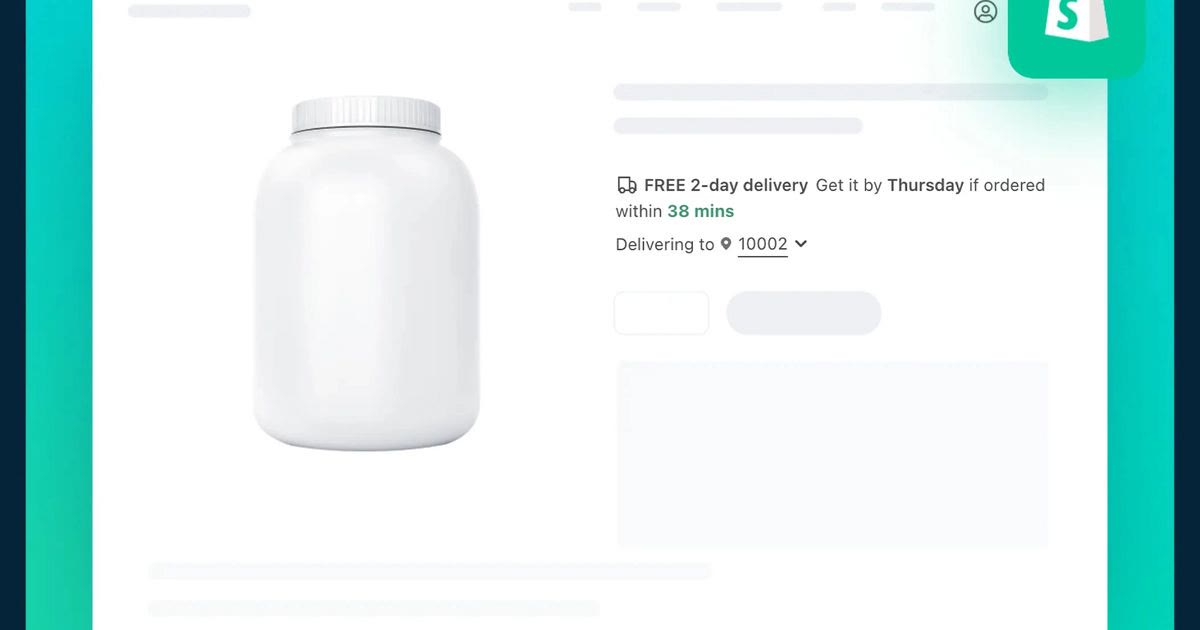
Flexport sells "freight forwarding, customs brokerage, and fulfillment services" [14]. Its ecommerce fulfillment runs from "seven warehouses with more than five million square feet of space across the United States, Canada, and United Kingdom" [11].
Verified features: Flexport integrates with "50+ ecommerce and retailer platforms including Shopify, Amazon, Walmart Marketplace" [11].
Pricing: The fulfillment page asks you to request a demo and shows no rate card [11].
Strengths: If you import from overseas, one company can handle the container, the customs and the parcel [14].
Limitations: There is no public pricing to compare against, and much of Flexport's pitch is about freight and customs, which a small store buying from domestic suppliers may not need [14].
Best fit: A brand importing its own goods that wants freight, customs and fulfillment on one invoice.
How to choose a 3PL fulfillment service
Decide whether to outsource at all. Packing orders yourself is usually cheaper until it eats the hours you need for selling. Most brands start looking for order fulfillment services when shipping takes a person's full day, when they need 2-day delivery they cannot offer from one location, or when they add Amazon, wholesale or retail channels.
Compare the four cost lines. Every 3PL bills some version of receiving, storage, pick and pack, and shipping [2]. Ask each one to price the same sample month: your real order count, average items per order, SKU count and package weight. Then add setup, software and minimum fees. ShipMonk, for example, ties its minimum to your first item pick fee and order volume [3].
Match the network to your customers. A bigger warehouse network shortens delivery times but splits your stock. If most buyers are in one region, a two-location 3PL may be enough.
Check integrations before the sales call. Confirm your store, marketplaces and any ERP connect directly. If you also run your own inventory tool, see our guide to inventory management software, and if you keep shipping in-house, our comparison of ecommerce shipping software.
Price the extras. Kitting, custom boxes, returns, B2B orders and hazmat are where quotes differ most [2, 3, 7].
Brands with odd workflows, such as subscription logic or wholesale portals, sometimes need a custom layer between store and 3PL. That is the kind of build we do in custom CRM development.
FAQ
What do order fulfillment services cost?
Most providers quote per business. ShipBob lists implementation, receiving, warehousing, and pick, pack and ship as its standard fees [2]. ShipMonk sets a monthly minimum from your order volume and first item pick fee, less 20% [3]. Amazon MCF publishes a rate card based on product size, weight, units per order and speed [10].
What is the difference between 3PL fulfillment services and warehouse fulfillment services?
The terms overlap. A 3PL (third-party logistics provider) such as ShipBob or ShipMonk stores your inventory, picks and packs each order, and ships it [1, 3]. Warehouse fulfillment usually refers to the storage and pick-and-pack side of that same job.
Is there a minimum order volume for fulfillment services?
It depends on the provider. ShipMonk's monthly minimum is calculated from your projected volume [3]. Red Stag says you can request pricing before you start shipping [9]. ShipBob's pricing page does not state a minimum, so ask for one in writing [2].
Can I use my own branded boxes with a 3PL?
Usually yes. ShipBob allows custom boxes, mailers and inserts, and you pay to store them [2]. ShipMonk bills custom packages as an additional item during pick and pack [3]. Amazon MCF uses unbranded packaging by default [4].
Our recommendation
For most small Shopify and multichannel brands, get quotes from ShipBob and ShipMonk side by side and compare the same sample month [2, 3]. Add Amazon MCF if Amazon is already your biggest channel, Red Stag if your products are heavy, and Flexport if you import your own goods [4, 5, 11]. LVK is worth a call if you want a smaller team and no setup fee [7].
Sources
- Global Ecommerce Fulfillment Solution - ShipBob — checked 2026-11-25
- ShipBob Pricing: ShipBob's Outsourced Fulfillment Service Costs — checked 2026-11-25
- 3PL Fulfillment Pricing for D2C Brands - ShipMonk — checked 2026-11-25
- Multichannel Fulfillment (MCF) - Amazon Supply Chain Services (ASCS) — checked 2026-11-25
- Red Stag Fulfillment - A 3PL Ecommerce Fulfillment Company — checked 2026-11-25
- ShipMonk: Leading 3PL Fulfillment for D2C Ecommerce Brands — checked 2026-11-25
- Locations, Pricing, and Support - LVK Fulfillment FAQs - LVK — checked 2026-11-25
- LVK - LVK Logistics — checked 2026-11-25
- Red Stag Fulfillment Pricing - 3PL & Warehousing Services — checked 2026-11-25
- Fulfillment and storage fees in Amazon fulfillment centers - Amazon Supply Chain Services (ASCS) — checked 2026-11-25
- eCommerce Order Fulfillment Services - Flexport — checked 2026-11-25
- Newsroom - LVK — checked 2026-11-25
- Warehouse Management System - ShipHero — checked 2026-11-25
- Freight Forwarding & Supply Chain Platform - Flexport — checked 2026-11-25